The Looming Threat of ‘Godzilla’ El Niño What a Strong Pacific Warming Means for India’s 2026 Monsoon
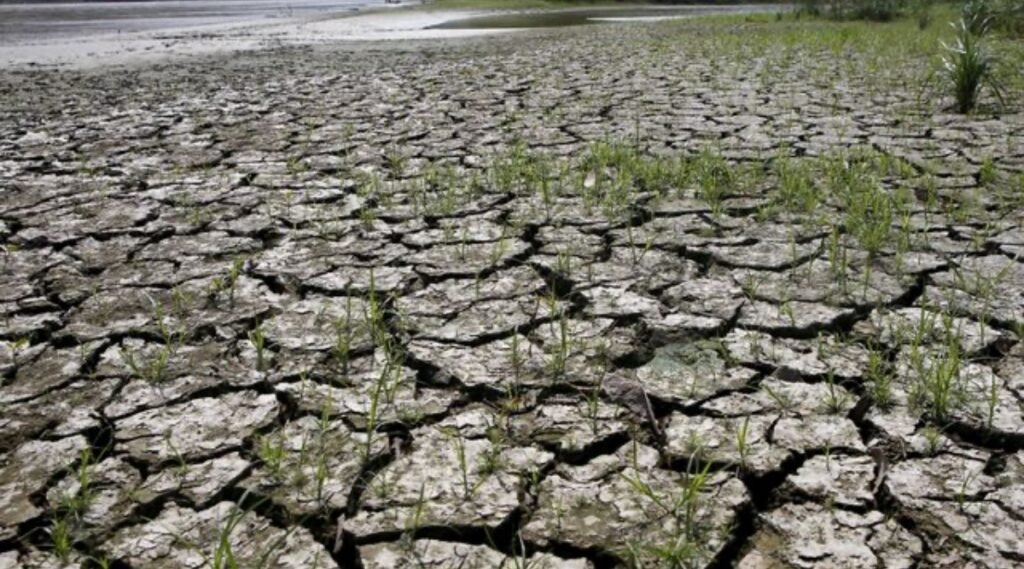
FILE PHOTO: An area is uncovered by the lowering of the water level from the Magdalena river, the longest and most important river in Colombia, due to the lack of rain, in the city of Honda, January 14, 2016. While flooding and intense rain wreak havoc on several countries in Latin America, El Nino brings other harmful effects to Colombia with severe drought. Picture taken January 14, 2016. REUTERS/John Vizcaino/File Photo
The India Meteorological Department (IMD) has officially confirmed the presence of El Niño conditions in the equatorial Pacific Ocean, with global agencies like NOAA warning of a 63% probability that it will intensify into a catastrophic “Super El Niño” by winter. Characterized by a sea surface temperature spike of \bm{\ge 2.0^\circ\text{C}} above the long-term average, this phenomenon is severely disrupting India’s critical southwest monsoon. The monsoon’s northward progress has drastically decelerated since its delayed arrival in Kerala on June 4, leaving the country facing a massive 35% nationwide rainfall deficit. Strong, dry mid-latitude westerly winds are actively pushing back rain-bearing clouds, resulting in severe regional shortfalls, particularly in Central India, which is grappling with a staggering 63% deficit.
This escalating climate crisis directly imperils the vital Kharif sowing season, threatening rain-fed staple crops such as rice, pulses, maize, and cotton across the subcontinent. In response to the looming agricultural shock and potential food price inflation, the Central Government has mobilized strict contingency measures, with Union Agriculture Minister Shivraj Singh Chouhan placing roughly 200 high-risk districts under priority monitoring. While states have been instructed to deploy scientific, crop-wise moisture conservation plans and introduce alternative short-duration seed varieties, the situation remains highly critical due to a neutral Indian Ocean Dipole (IOD) failing to provide any natural atmospheric buffering against the intense Pacific warming.