Lost for 180 Years, Rare Rungia mastersii Plant Rediscovered in Assam’s Dima Hasao
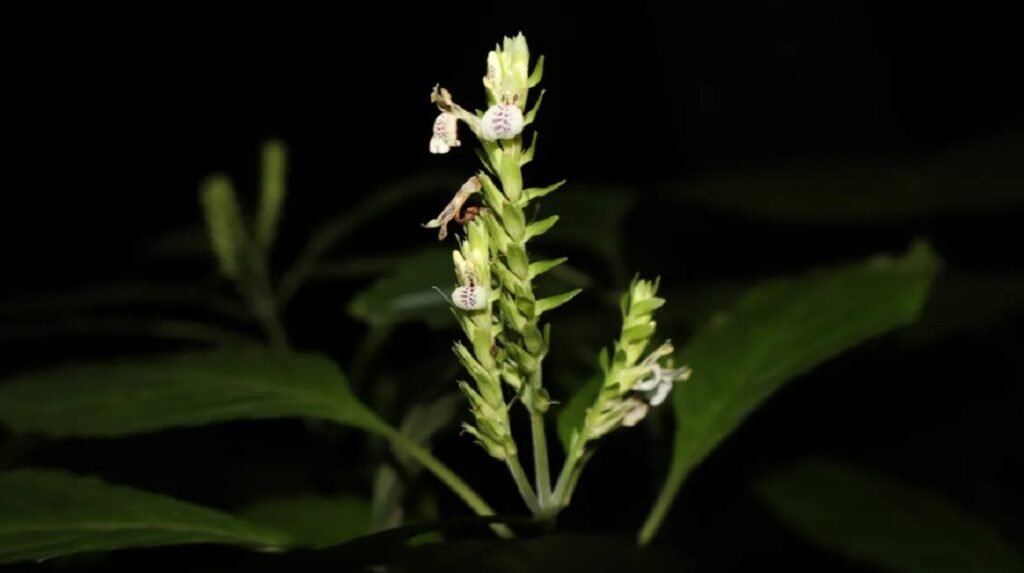
A flowering plant believed to have disappeared from scientific records for almost 180 years has been rediscovered in Assam’s Dima Hasao district, marking a significant breakthrough in botanical research.
The rare species, Rungia mastersii, was located by researchers from the Department of Life Science and Bioinformatics, Assam University, during botanical surveys in the Jatinga Hills. The plant was found growing in moist rock crevices along a shaded stream, highlighting its dependence on a highly specialised natural habitat.
The research was led by Professor Debjyoti Bhattacharyya and Kankan Kumar Das, whose findings have been published in an international peer-reviewed botanical journal.
The species was originally collected in 1845 by British botanist J.W. Masters from an unspecified location near the Sundar River in Assam. Since then, no confirmed sightings had been recorded anywhere in the world, and the Botanical Survey of India possessed only a single preserved herbarium specimen.
Professor Bhattacharyya said the rediscovery has revived scientific interest in a plant that had remained a mystery for generations of botanists.
Belonging to the Acanthaceae family, Rungia mastersii is a shrubby herb that grows between 60 cm and 110 cm in height. It produces pale green to whitish flowers adorned with delicate purple markings and thrives at elevations of around 900 to 1,250 metres above sea level.
Despite the remarkable discovery, researchers have warned that the species faces a serious risk of extinction. Only one natural population comprising around 40 individual plants has been identified so far.
Scientists cautioned that habitat degradation, landslides, forest clearance, changes in stream flow and other human activities could threaten the plant’s survival.
Although the species has not yet been evaluated under the IUCN Red List, the researchers stressed the need for an immediate conservation assessment and habitat protection to ensure its long-term survival.
The rediscovery offers scientists a rare opportunity to study the plant in its natural environment and better understand its ecological significance before it is lost again.